South India’s aquaculture exporters are increasingly losing high‑value US contracts because of residue violations, weak traceability, and risk‑averse buyers, and one powerful way to reverse that trend is to shift from commodity feed with risky additives to antibiotic‑free, spirulina‑fortified functional feeds supplied by compliant microalgae specialists in India.
By partnering with a natural spirulina aquaculture feed supplier India like Nutrialgo, exporters can cut antibiotic dependence at the pond level, improve shrimp performance, and build a feed‑to‑fork story that reassures US buyers and regulators.
US buyers have changed the rules
Over the last few years, the US FDA has repeatedly rejected shrimp shipments from India (and other Asian origins) for residues of banned antibiotics such as chloramphenicol and nitrofuran metabolites. The FDA’s Import Alerts (for example 16‑124 and 16‑129) allow “Detention Without Physical Examination” for exporters associated with drug residues, which means containers can be held or refused on paperwork alone.
In 2024, FDA refusals for antibiotic‑tainted shrimp hit a nine‑year high, with 81 entry lines refused, including 31 from India, and early 2025 data shows Indian shipments again among the first refusals. At the same time, testing frequency for Indian shrimp has climbed sharply, with some lanes facing sampling rates as high as 50 percent and near‑zero ppb limits for chloramphenicol, nitrofurans, and other drugs.
Why South Indian exporters are losing contracts
When US buyers see repeated FDA refusals and Import Alerts tagged to India, they respond by tightening supplier lists, pushing more volume to Latin American or domestic producers, or demanding steep discounts to cover risk. Several factors are driving this loss of confidence:
- Residues of banned antibiotics like chloramphenicol and nitrofurans continue to be detected in Indian shrimp, triggering refusals in both US and EU markets and damaging India’s reputation as a reliable origin.
- Non‑compliant additives such as ethoxyquin in feed or excessive sulphite/phosphate usage in processing have also caused earlier temporary bans and intensified testing of Indian shipments.
- Traceability gaps—missing or inconsistent SIMP (Seafood Import Monitoring Program) data, pond IDs, and custody trails—lead to shipment holds or seizure, even when the product itself might be clean.
For South Indian exporters who built their business on price competitiveness, these risks show up as container delays, contract cancellations, and buyers quietly moving allocations elsewhere.
The hidden root cause: what goes into the pond
Most exporters try to “fix” their US problem at the processing plant with extra washing, selective grading, and more lab testing. But by then, any antibiotic or ethoxyquin that entered via feed has already become a residue in shrimp muscle or shell and cannot be removed.
In India, farm‑level misuse of veterinary drugs—overdosing, not respecting withdrawal periods, and relying on medicated feed during disease outbreaks—is still well documented, even though shrimp feed is legally required to be antibiotic‑free. When farmers feel they have no other defense against Vibrio, EMS, or WSSV, they fall back on unapproved antibiotics or heavy chemistries, and those decisions later show up as positive residue reports in US and EU ports.
That is why any exporter serious about saving or growing US contracts has to start with feed inputs and functional nutrition—not just downstream plant hygiene.
One ingredient change that rewrites the story
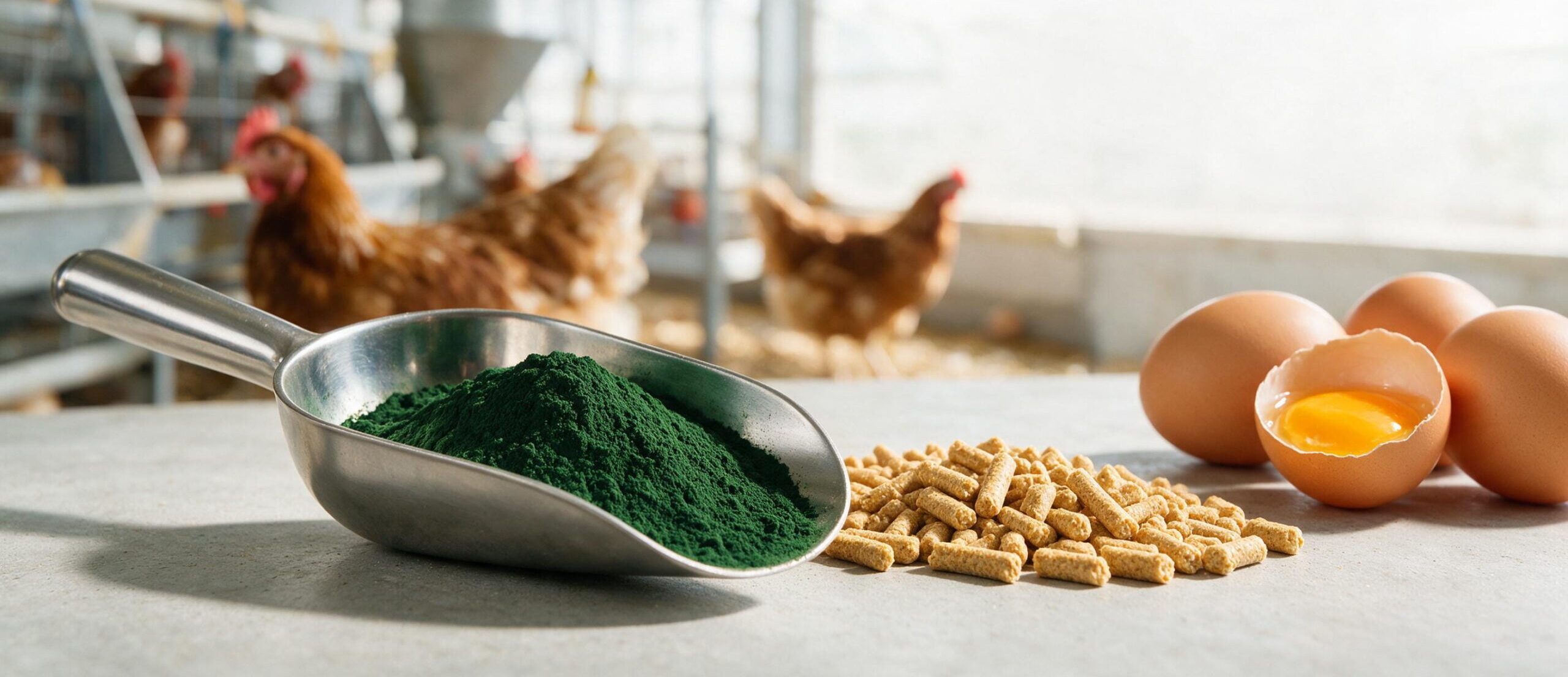
Instead of relying on commodity feeds that promise “highest growth at lowest cost” but quietly push farmers toward risky antibiotic use during stress events, exporters can mandate or incentivize feeds that include natural, functional ingredients like spirulina.
Spirulina (Arthrospira) is a microalgae with 55–70 percent high‑quality protein, essential amino acids, vitamins, minerals, pigments like phycocyanin and carotenoids, and a range of bioactive compounds. Aquaculture studies show that dietary spirulina can partially replace fishmeal without compromising growth or feed efficiency while improving pigmentation, immune response, gut health, and survival in multiple fish species.
For shrimp, recent trials with Spirulina platensis supplementation in Pacific white shrimp (Litopenaeus vannamei) have reported better growth performance, higher antioxidant capacity, healthier tissue histology, and stronger resistance to Vibrio parahaemolyticus infection. Together, these effects translate into fewer clinical disease outbreaks and less pressure on farmers to reach for banned antibiotics, attacking the residue problem at its source.
How spirulina‑based feed helps you keep US buyers
Shifting a portion of the protein and functional ingredient budget into spirulina‑fortified feeds does three things that US importers care about.
- Reduces antibiotic dependence at farm levelSpirulina’s immune‑modulating and antioxidant properties support shrimp resilience under stocking density, temperature swings, and water‑quality stress, so farmers are less likely to see mass mortalities that push them into emergency antibiotic use. As immune status improves, the farm can maintain performance using legally acceptable health tools (probiotics, biocontrol, good management) instead of drugs that later show up as residues.
- Improves product quality and consistencySpirulina pigments and balanced amino acids improve flesh coloration, robustness, and post‑harvest stability, especially in fish and shrimp where appearance and texture drive export pricing. More uniform size distribution and survival also mean better yield per pond and more predictable container loading, which logistics teams and US buyers value.
- Strengthens the traceability narrativeWhen you can show that your farms use a documented, antibiotic‑free feed program built around certified microalgae ingredients and traceable lots, your residue‑free reports become more believable and your risk profile lower. That positions your brand as a “low‑noise supplier” in the eyes of US importers who are tired of surprise FDA holds.
Why choose Nutrialgo’s spirulina feed solutions
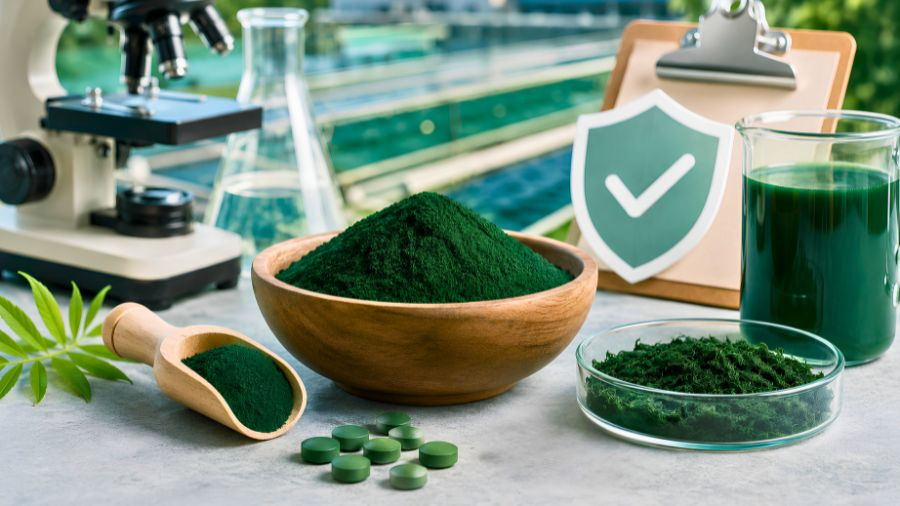
A natural spirulina aquaculture feed supplier India that understands both microalgae and export compliance gives South Indian exporters an edge. Nutrialgo is a microalgae‑focused company with state‑of‑the‑art cultivation and processing, aligned with global standards such as ISO‑based food safety systems and organic frameworks, and built to supply both human nutrition and animal feed markets.
For aquaculture, Nutrialgo offers two complementary formats:
- Pure spirulina feed‑grade biomass (powder) that large feed mills can incorporate into their own formulas at defined inclusion rates, and
- Spirulina‑fortified fish and shrimp pellets with around 20–35 percent spirulina inclusion and protein ranges roughly 21–29 percent, designed specifically for functional aquafeed performance (palatability, survival, robustness).
Every supply lot is backed by a Certificate of Analysis, batch‑wise nutritional specs, contaminant and heavy‑metal testing, and traceability documentation, with ppm action and rejection limits aligned to destination‑market requirements. This kind of lab‑driven, microalgae‑centric partner allows exporters to tell US buyers exactly which feed ingredients went into their ponds and how they were controlled.
From commodity protein to functional performance
The key mindset shift is to stop evaluating spirulina against the cheapest 22 percent protein feed on a rupees‑per‑kg basis and instead look at performance per kg of shrimp harvested. Spirulina is not a cheap bulk protein; it is a functional ingredient that influences FCR, survival, stress tolerance, and product quality—the same KPIs that buyers ultimately pay for.
Nutrialgo’s internal feed formulations for fish and shrimp pellets are built around realistic inclusion ranges and digestible energy bands (roughly 2,900–2,958 kcal/kg) that match aquaculture biology rather than just label protein numbers, making it easier for mills and farms to adopt without having to reinvent their entire formula logic. By plugging a pre‑engineered spirulina module into existing diets, feed manufacturers can upgrade functionality with minimal disruption.
What to ask your spirulina supplier
If you are an exporter or integrated farm group in South India, use this checklist when evaluating any natural spirulina aquaculture feed supplier India:
- Can they supply both pure spirulina and ready‑to‑use spirulina pellets tailored to shrimp and fish growth stages, with clear protein and energy specs?
- Do they provide batch‑wise COAs covering nutrition and contaminant ppm limits (heavy metals, mycotoxins, microbials) and can they align those with US and EU feed‑safety frameworks?
- Is their production capacity and planning robust enough (e.g., tonne‑scale annual capacity, forecast‑based allocations, safety stock) to support long‑term feed programs rather than ad‑hoc spot purchases?
- Will they help design and interpret structured farm trials (control vs spirulina inclusion) with clear success metrics like FCR, mortality, weight gain, pigmentation, and harvest quality?
Working with a supplier that can say “yes” to these questions turns spirulina from an experimental additive into a strategic tool for export‑market risk management.
Action plan for South Indian exporters
To turn spirulina‑based functional feed into a US‑facing competitive advantage, exporters can follow three practical steps:
- Audit current feed and residue risk: Map which farms and ponds supply your US‑bound containers and list the feeds, additives, and health products they use, including any history of disease‑driven antibiotic use. Cross‑check this against past FDA or EU lab findings for your company or region to identify the highest‑risk links in your chain.
- Deploy spirulina trials in targeted clusters: Work with Nutrialgo to set up structured trials comparing your current feed program with spirulina‑fortified diets in the same region and season, tracking FCR, survival, growth curves, stress events, and any need for therapeutic interventions. Use these data to demonstrate to internal teams—and later to US buyers—that you can maintain or improve performance while reducing disease pressure and antibiotic usage.
- Build a stronger story for US customers: Once trial results are in, update your US customer decks to highlight your antibiotic‑free feed policy, spirulina‑based functional nutrition program, and third‑party lab data confirming clean residue profiles and robust quality. This moves you from a “price supplier from a high‑risk country” to a “differentiated, low‑risk partner with proactive feed innovation,” which is exactly what US importers and retailers are now looking for.
By tackling the residue problem at its root—feed and farm health—and partnering with a specialist natural spirulina aquaculture feed supplier India such as Nutrialgo, South Indian exporters can stop losing contracts to avoidable FDA refusals and instead use spirulina‑powered functional feeds as a selling point in the US market.