Why Heavy Metal Testing Is No Longer Optional
Launching a spirulina product is easier than ever. Protecting your brand from a product recall is not.
Consumers today expect complete transparency from supplement brands. Regulatory agencies, distributors, and international buyers are also demanding stronger quality documentation than ever before. If your spirulina supplier cannot prove where every batch came from—or cannot demonstrate consistent heavy metal testing—your business is taking a significant risk.
A single contaminated batch can lead to recalls, rejected export shipments, damaged customer trust, and long-term reputational harm. Choosing a spirulina bulk supplier India traceable is no longer just a purchasing decision; it is a critical part of your quality assurance strategy.
This guide explains how to evaluate a spirulina supplier before your brand pays the price.
Why Heavy Metals Matter in Spirulina
Spirulina naturally absorbs nutrients from its growing environment. Unfortunately, if cultivation water or surrounding soil contains contaminants, the algae may also absorb unwanted heavy metals.
The most closely monitored heavy metals include:
- Lead (Pb)
- Arsenic (As)
- Cadmium (Cd)
- Mercury (Hg)
Excessive levels can create regulatory compliance issues in domestic and international markets. Retailers, importers, and certification bodies increasingly require laboratory evidence that every production batch complies with accepted safety standards.
For supplement brands, relying on supplier claims without documented verification creates unnecessary business risk.
The Hidden Cost of a Product Recall
Many businesses think recalls only affect manufacturers.
In reality, the brand printed on the label receives the greatest public attention.
A heavy metal recall can result in:
- Product withdrawal from distributors
- Lost retailer confidence
- Import shipment rejection
- Legal liabilities
- Expensive product destruction
- Negative media coverage
- Permanent damage to consumer trust
Recovering from a recall often costs significantly more than investing in a reliable supplier from the beginning.
Traceability Is Your First Line of Defense
The most reliable suppliers don’t simply provide spirulina—they provide complete traceability.
A traceable supply chain allows every production batch to be tracked from cultivation to final packaging.
Ask whether your supplier can identify:
- Cultivation pond used
- Harvest date
- Processing batch
- Drying records
- Packaging batch
- Laboratory testing reports
- Dispatch documentation
If any stage cannot be verified, your supplier may struggle to investigate quality issues should they arise.
Businesses sourcing from a spirulina bulk supplier India traceable should expect documented records rather than verbal assurances.
Five Questions Every Buyer Should Ask
1. Does Every Batch Undergo Heavy Metal Testing?
Testing should never be occasional.
Each production batch should be verified before shipment.
Request:
- Certificate of Analysis (CoA)
- Heavy metal test reports
- Microbiological analysis
- Moisture analysis
- Protein analysis
A reputable supplier will provide these documents without hesitation.
2. Is Testing Performed by Accredited Laboratories?
Internal testing is valuable, but independent verification provides stronger credibility.
Ask whether testing is conducted through:
- NABL-accredited laboratories
- ISO-compliant laboratories
- Third-party analytical facilities
Independent testing increases confidence for distributors and international buyers.
3. Can the Supplier Trace Every Batch?
Every shipment should include a batch number that links directly to production records.
Traceability should include:
- Harvest records
- Drying process
- Processing logs
- Packaging records
- Laboratory reports
If your supplier cannot retrieve this information within minutes, their quality system may not be sufficiently robust.
4. What Certifications Does the Facility Hold?
Certifications alone do not guarantee product quality, but they indicate structured quality management systems.
Look for suppliers operating under recognised standards such as:
- GMP
- ISO-certified quality management systems
- FSSAI compliance
- Halal certification (where required)
- Kosher certification (where required)
- Organic certifications applicable to your market
Certification should always be supported by real operational practices rather than marketing claims.
5. Can They Support Regulatory Audits?
As your business grows, distributors and regulatory authorities may request additional documentation.
Your supplier should be capable of providing:
- Batch traceability records
- Manufacturing documentation
- Quality control procedures
- Laboratory reports
- Export documentation
- Product specifications
Suppliers unable to provide audit-ready documentation can become a liability for your business.
Warning Signs You Should Never Ignore
Low pricing should never be the primary reason for selecting a spirulina supplier.
Common warning signs include:
- No recent laboratory reports
- Missing batch numbers
- Inconsistent product colour between shipments
- Unclear cultivation location
- No documented quality system
- No third-party testing
- Reluctance to answer technical questions
- Generic certificates unrelated to supplied batches
If documentation appears incomplete, assume further verification is necessary.
Why Traceability Is Becoming a Competitive Advantage
Global supplement markets are changing rapidly.
Retail chains, contract manufacturers, and exporters increasingly prioritise suppliers that can demonstrate:
- Supply chain transparency
- Consistent laboratory verification
- Documented manufacturing controls
- Regulatory readiness
Choosing a spirulina bulk supplier India traceable helps brands reduce operational risk while strengthening customer confidence.
Instead of reacting to quality problems, businesses with traceable supply chains prevent them before products reach consumers.
How Nutrialgo Supports Batch-Level Traceability
At Nutrialgo, traceability is integrated throughout the cultivation and manufacturing process.
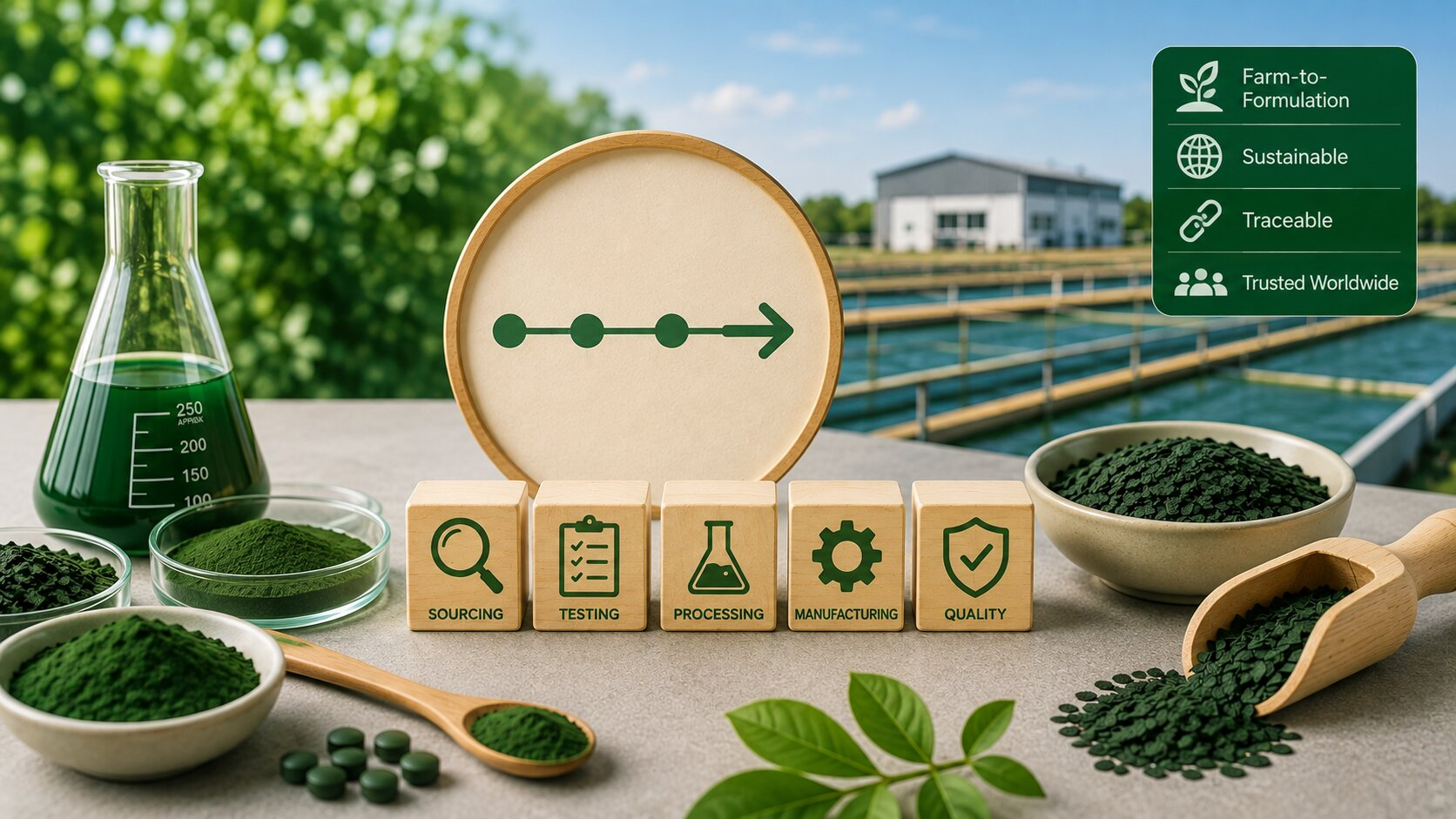
The company maintains documented production workflows from cultivation through harvesting, drying, processing, laboratory verification, and packaging. Operating from its manufacturing facility in Karaikudi, Tamil Nadu, Nutrialgo follows established quality systems and supports B2B customers with documentation required for procurement and compliance. The company manufactures spirulina in multiple formats, including powder, tablets, puree, slurry, and phycocyanin-rich spirulina ingredients for nutraceutical, food, cosmetic, and industrial applications.
Rather than relying solely on certification logos, Nutrialgo focuses on providing batch-level documentation that supports procurement due diligence and long-term supplier relationships.
Choosing the Right Supplier Protects More Than Your Product
Selecting a spirulina supplier is ultimately about protecting your business.
Reliable traceability, routine heavy metal testing, independent laboratory verification, and documented quality systems reduce the likelihood of costly recalls while giving customers greater confidence in your products.
Before signing your next supply agreement, ensure your supplier can prove—not simply promise—that every batch meets your quality expectations.
When your supply chain is transparent, your brand is stronger.
Related Resources
To learn more about Nutrialgo’s quality systems and manufacturing capabilities, explore:
- Quality Assurance System
- Laboratory Quality Control
- Farm-to-Batch Traceability
- Certifications (ISO, GMP, FSSAI, Halal & Kosher)
- Spirulina Powder
- Private Label & Contract Manufacturing
- About Nutrialgo
These internal resources provide additional insight into the company’s cultivation practices, laboratory testing, manufacturing standards, and quality assurance processes, supporting informed supplier evaluation. The website’s content strategy also emphasizes dedicated traceability and certification pages to strengthen buyer confidence and procurement due diligence.