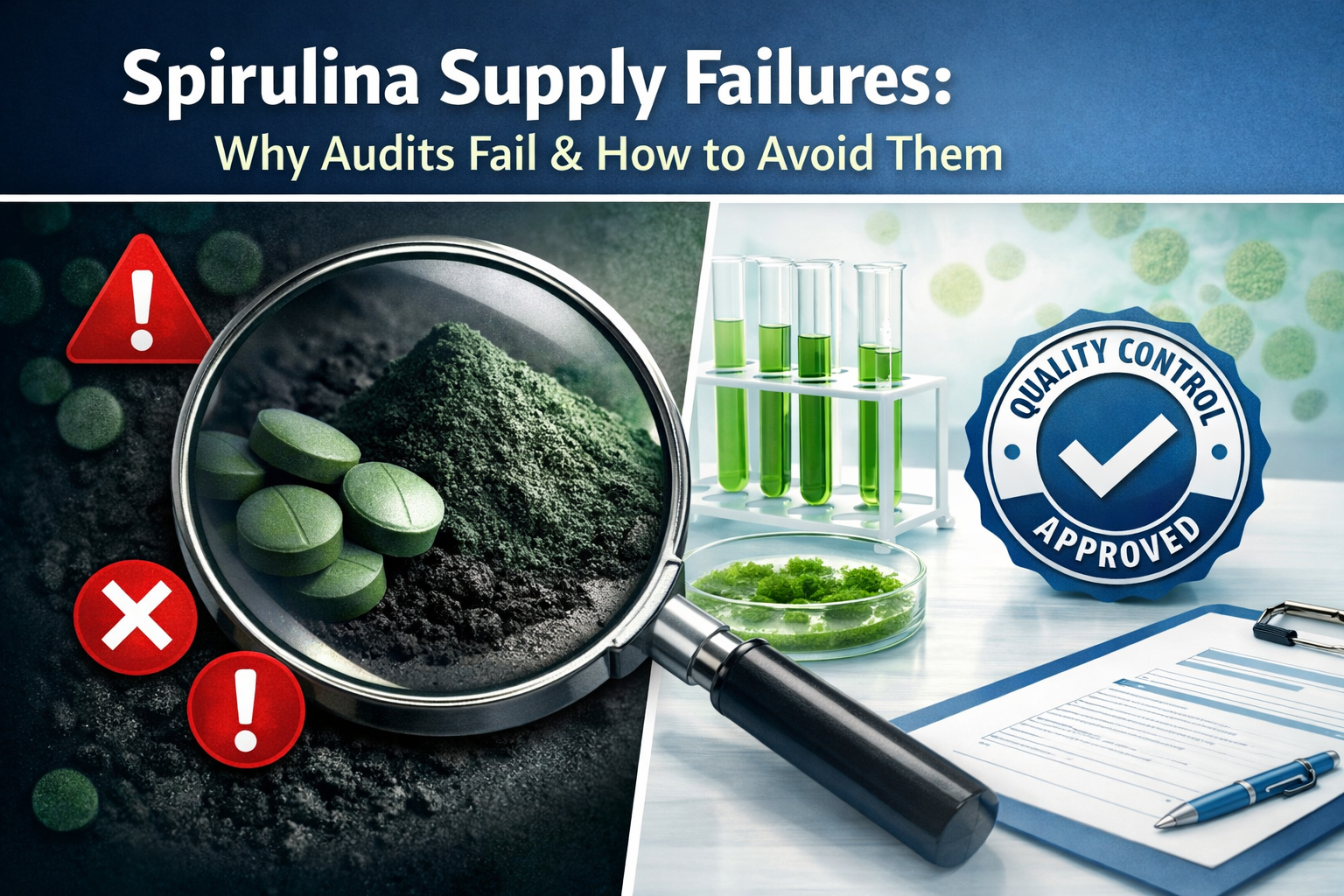
Spirulina has become the superfood of choice for nutraceutical brands globally. Yet a dangerous supply-chain crisis is silently undermining entire product lines. Brands sourcing imported spirulina without verified certifications face contamination risks, regulatory audit failures, and catastrophic brand damage. This article reveals why certified ISO 9001 spirulina from trusted Indian suppliers like Nutrialgo is transforming B2B nutrition sourcing—and why 90% of imported alternatives fail to meet modern compliance standards.
The Spirulina Supply Problem: Why Most Brands Get It Wrong
Cost-Cutting Imports & Lack of Traceability Create Brand Risk
The global spirulina market operates on a dangerous paradox: the cheapest suppliers often carry the highest hidden costs. Imported spirulina from unvetted sources frequently undergoes minimal quality oversight. Without proper traceability systems, brands cannot trace contamination back to the source or prove compliance during audits. Heavy metals like lead, mercury, cadmium, and arsenic accumulate in spirulina when cultivation occurs in poorly regulated environments or when extraction processes use substandard techniques. Research published by the WHO and EFSA reveals that contamination incidents result in batch rejections, export bans, and permanent reputational damage. When a major retailer pulls your product from shelves due to contamination, the financial and brand impact extends far beyond the cost of the contaminated batch.
The real risk? 90% of imported spirulina suppliers lack the three critical certifications that retailers and auditors demand: ISO 9001 (quality management systems), GMP (good manufacturing practices), and third-party verification through SGS or equivalent certification bodies. Without these credentials, your supply chain becomes a regulatory liability.
Audit Failures, Contamination, and Compliance Nightmares Are Real
Recent industry audits reveal a pattern: brands using multiple low-cost spirulina suppliers face compliance failures at alarming rates. When regulatory bodies like the FDA, FSSAI (India’s Food Safety Authority), or European regulators conduct inspections, they examine Certificates of Analysis (CoA), batch traceability records, and manufacturing process documentation. Imported spirulina often fails because suppliers cannot provide:
- Batch-specific CoA records documenting heavy metal, microbial, and pesticide testing
- Proof of cultivation conditions and water quality standards
- Production facility certifications demonstrating GMP compliance
- Chain-of-custody documentation showing proper storage and transportation
A single audit failure can result in: product recalls, export suspension, retail delisting, and erosion of consumer trust. Brands report spending between $50,000 to $500,000+ to address compliance issues triggered by uncertified supplier relationships. Beyond the financial hit, the reputational damage to your brand can take years to recover.
What Makes Certified Spirulina Different?
ISO 9001, GMP, SGS Verification Explained for Buyers
ISO 9001:2015 certification establishes a quality management system that ensures consistency across production. Unlike generic quality claims, ISO 9001 means: documented processes, systematic testing protocols, record-keeping accountability, and regular audits by third-party bodies. For spirulina suppliers, ISO 9001 demonstrates that every batch undergoes the same rigorous controls—no exceptions.
GMP (Good Manufacturing Practices) certification, often called FSSAI-GMP in India, mandates strict operational standards: controlled cultivation environments, food-grade material handling, contamination prevention measures, and worker hygiene protocols. GMP ensures your spirulina powder, tablets, or capsules don’t become cross-contaminated during processing.
SGS verification and similar third-party audits add transparency. SGS (Société Générale de Surveillance), a globally respected certification body, conducts unannounced facility inspections, tests products independently, and verifies compliance with international standards. When a supplier displays an SGS audit stamp, it signals: “Our operations have been independently verified by a trusted global authority.”
The Testing Process: From Cultivation to Final Batch Release
Certified spirulina suppliers operate a multi-stage quality assurance workflow. Here’s how it works:
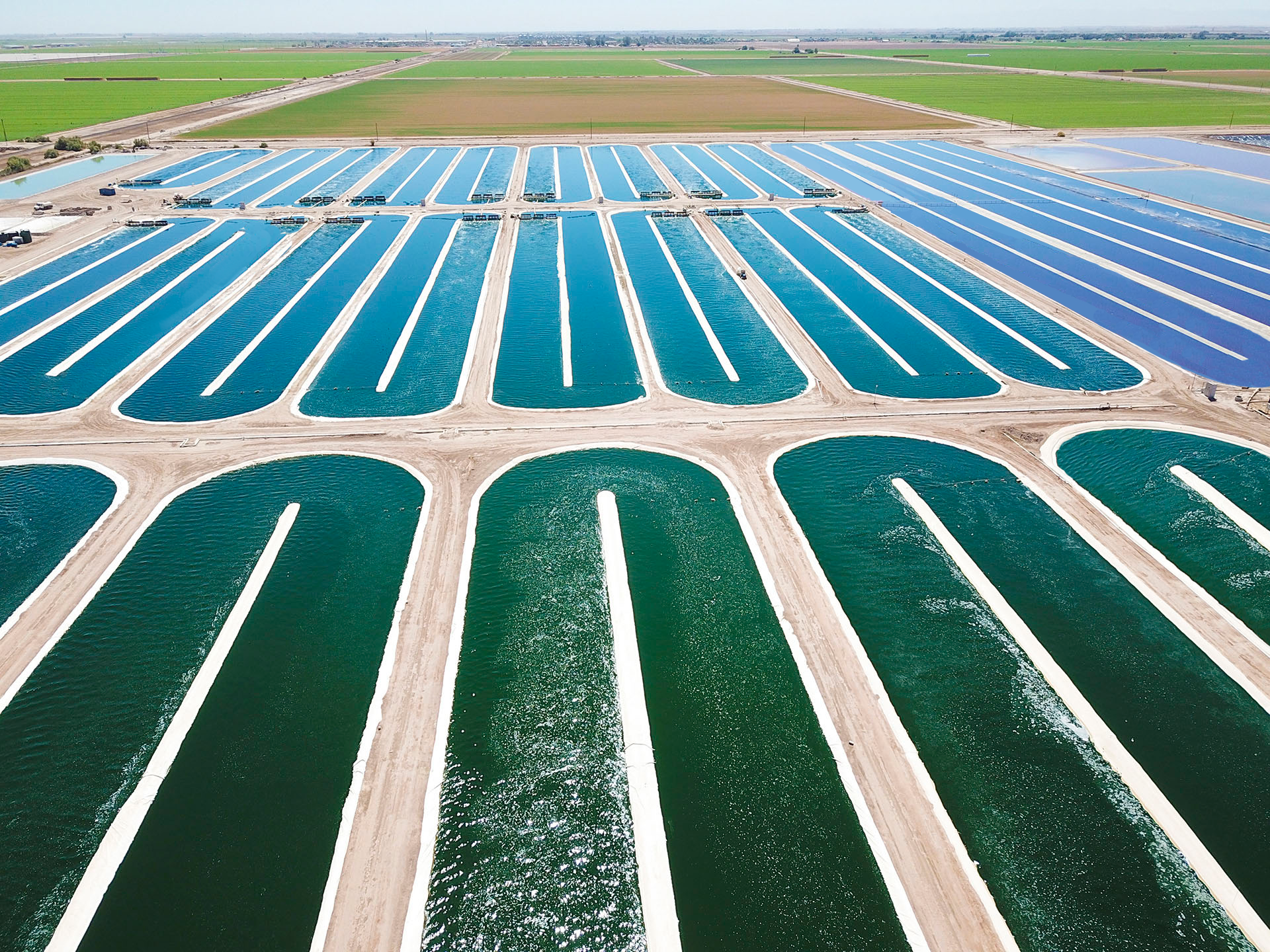
Stage 1 – Cultivation: Spirulina is grown in controlled ponds using verified water sources (tested for chemical, microbial, and heavy-metal contaminants). Environmental conditions—pH, light, temperature, nutrient composition—are monitored continuously.
Stage 2 – Harvesting: Spirulina is harvested using separation technologies that minimize contaminant accumulation. The harvest is recorded with date, time, and batch identification.
Stage 3 – Initial Processing: Fresh biomass undergoes drying and milling in GMP-certified facilities. Temperature-controlled processing preserves nutrient bioavailability while eliminating pathogens.
Stage 4 – Laboratory Testing: Each batch is tested for:
- Heavy metals (lead, mercury, cadmium, arsenic): Must remain below regulatory limits (EU Organic, USDA-NOP, or India NPOP standards)
- Microbial contamination (E. coli, Salmonella, total plate count): Must meet USP or FSSAI standards
- Pesticide residues: Must be absent or below MRL (Maximum Residue Levels)
- Moisture and protein content: Verified to match specifications
- Bioavailability markers (phycocyanin, carotenoid content): Ensure nutritional potency
Stage 5 – Certificate of Analysis (CoA) Release: A detailed CoA document, signed by certified lab personnel, accompanies every shipment. This becomes your audit documentation.
Nutrialgo’s Spirulina Quality Stack
Certifications That Matter: ISO 9001, GMP, FSSAI, Halal, Kosher, Organic
Nutrialgo Private Limited operates under a comprehensive certification framework:
- ISO 9001:2015: Quality Management System ensuring consistent, documented processes
- FSSAI-GMP: India’s Food Safety Authority certification for manufacturing excellence
- ISO 22000: Food Safety Management System certification (GFSI recognized)
- FSSAI Licensing: Full compliance with India’s food safety regulations
- Organic Certifications (NPOP, EU Organic, USDA): Proving sustainable, chemical-free cultivation
- Halal & Kosher: Adherence to religious and dietary standards
- NutriGold Certification: Proprietary in-house certification ensuring elite quality standards
This multi-layered certification approach means: when auditors visit your manufacturing facility, you can confidently reference a single, fully-compliant spirulina partner whose credentials span every major regulatory framework globally.
Lab-to-Batch Traceability: Every Shipment Comes with CoA
Nutrialgo’s advanced tracking system ensures complete traceability. Every spirulina powder, tablet, or capsule batch receives:
- Unique batch identification codes linked to cultivation dates
- Lab test results documenting heavy metals, microbial loads, and nutrient content
- Digital CoA records are accessible via QR code for real-time auditor verification
- Cold-chain documentation proving proper storage and transportation temperatures
- Manufacturing date and expiry information for compliance with international shelf-life standards
This level of documentation transforms your audit experience. Instead of scrambling to reconstruct batch records, you present auditors with pre-compiled, third-party verified documentation that demonstrates systematic compliance.
R&D-Backed Formulations: Why Nutrialgo Spirulina Bioavailability Matters
Beyond compliance, Nutrialgo’s research and development team focuses on creating products with superior bioavailability. Our R&D services include:
- Optimized drying protocols that preserve phycocyanin (the antioxidant pigment that makes spirulina therapeutically valuable)
- Controlled fermentation processes that enhance amino acid profiles
- Custom formulation blends tailored to specific animal feed or nutraceutical applications
- Bioavailability testing ensures nutrients are absorbed efficiently in human and animal digestive systems
For B2B nutrition brands, this means: when you formulate with Nutrialgo spirulina, your finished products contain measurably higher nutrient density compared to alternatives. This translates to stronger product claims, better consumer results, and a competitive advantage.
Real Case Study: How a Leading Indian Nutraceutical Brand Avoided Audit Failure
A mid-sized Indian nutraceutical company manufactured spirulina tablets for domestic and export markets. For three years, they sourced bulk spirulina from three different suppliers—all offering competitive pricing, none offering ISO 9001 certification.
The Crisis: During an SGS audit conducted by a major European retailer, inspectors requested batch CoA records for products shipped over the previous 18 months. The company discovered that two suppliers had gone out of business, one refused to provide documentation retroactively, and no consistent batch-testing records existed.
The audit result? Immediate product delisting and a 6-month suspension before reauditing could occur. The company faced a potential export ban to EU markets and lost contracts worth approximately $200,000.
The Solution: They consolidated their supply chain entirely to Nutrialgo’s contract manufacturing services. Within weeks:
- Nutrialgo provided digitized CoA records for every previous shipment (demonstrating historical compliance)
- Full ISO 9001 and SGS certification documentation established immediate credibility
- Custom batch-tracking system ensured all future shipments came with complete traceability records
- Nutrialgo’s R&D team optimized the spirulina formulation, improving tablet bioavailability by 20%
The Result: The company passed the re-audit on the first attempt. Within 12 months, they expanded from 3 retail accounts to 12 across Europe. Total value creation? Estimated $500,000+ in new revenue, plus restored brand reputation.
This transformation illustrates a critical insight: certified spirulina partnerships aren’t just about compliance—they’re about competitive advantage.
The Cost of Non-Compliance: A Quick Breakdown
Non-compliance doesn’t just mean audit failure. Here’s the real financial picture:
| Impact Area | Typical Cost Range |
|---|---|
| Audit Failure & Remediation | $50,000–$150,000 |
| Product Recall & Destruction | $100,000–$500,000+ |
| Export Suspension (lost sales) | $200,000–$1,000,000 annually |
| Retail Delisting & Reauditing | $25,000–$100,000 |
| Reputational Damage & Recovery | $500,000+ (long-term) |
| Legal & Regulatory Fines | $50,000–$500,000+ |
| Total Average Impact | $925,000–$2.25 million+ |
By contrast, switching to a fully-certified spirulina partner like Nutrialgo through our contract manufacturing services typically costs: premium pricing on spirulina (5-15% above budget suppliers) = approximately $50,000–$150,000 annually, depending on volume. The ROI is immediate: avoid even one audit failure, and you’ve saved 5–10 years of premiums.
How to Choose Your Spirulina Supplier in 2026
5 Checklist Items Every Buyer Should Verify
Before signing any spirulina supply agreement, verify:
1. Third-Party Certifications: Request proof of ISO 9001, GMP, and FSSC 22000 or equivalent. Don’t accept supplier claims without certification documents.
2. Batch-Level Traceability: Ask: “Can you provide a Certificate of Analysis for every batch I’ve purchased over the last 24 months?” If the answer is “no,” move on.
3. Heavy Metal & Microbial Testing Protocols: Confirm that every batch undergoes independent lab testing (not just in-house testing) for lead, mercury, cadmium, arsenic, E. coli, Salmonella, and total plate count.
4. Regulatory Compliance Timeline: Verify that the supplier has maintained continuous compliance certifications for at least 3+ years. New certifications are less reliable than long-standing ones.
5. R&D & Innovation Capacity: Ask about custom formulation capabilities, bioavailability testing, and product optimization services. This separates true partners from commodity suppliers.
Ready to Lock in Certified Spirulina?
The choice is clear: certified spirulina sourcing eliminates audit risk, strengthens brand reputation, and unlocks competitive advantage. Nutrialgo’s ISO 9001, GMP, and SGS-certified spirulina products—backed by comprehensive batch traceability, R&D innovation, and decades of supply-chain excellence—represent the gold standard for B2B nutrition sourcing.
Explore our comprehensive service offerings:
- Contract Manufacturing for end-to-end production solutions
- Private Labeling for brand-ready products
- Quality Assurance for compliance peace of mind
- Third-Party Packaging for flexible packaging solutions
Next Step: Request a sample of Nutrialgo’s certified spirulina powder, tablets, or capsules. Experience the quality difference, review the complete certification documentation, and see why leading Indian and global nutraceutical brands are consolidating their supply chains to a single, fully-compliant partner.
Contact Nutrialgo today to discuss your spirulina requirements and learn how certified sourcing transforms both compliance and competitive positioning.